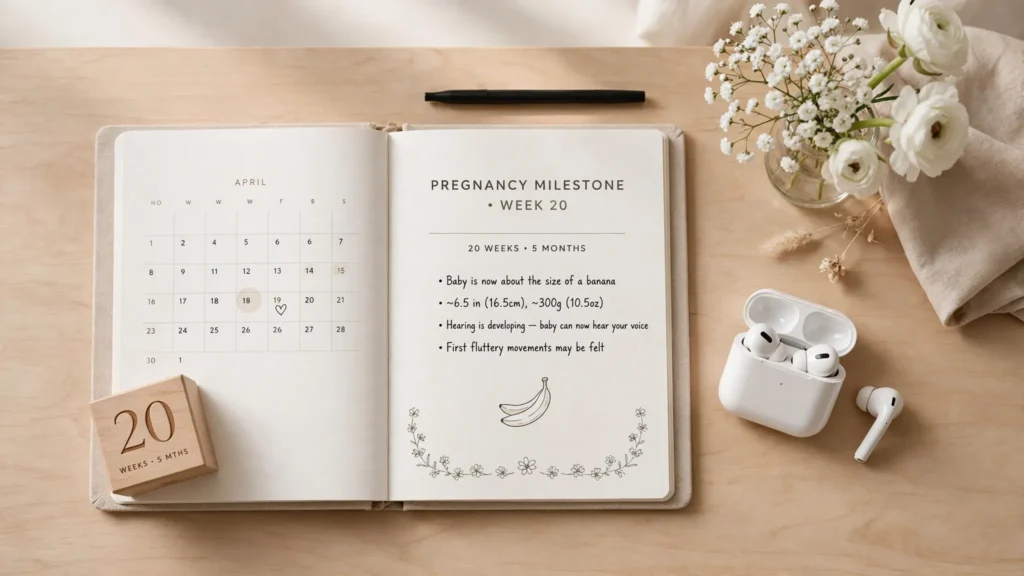
Pregnancy can generate a lot of information.
There are appointments to remember, pregnancy milestones to follow, questions to ask, symptoms to understand, preparations to make, and countless changes happening from one week to the next.
A pregnancy app can help bring some of that information together.
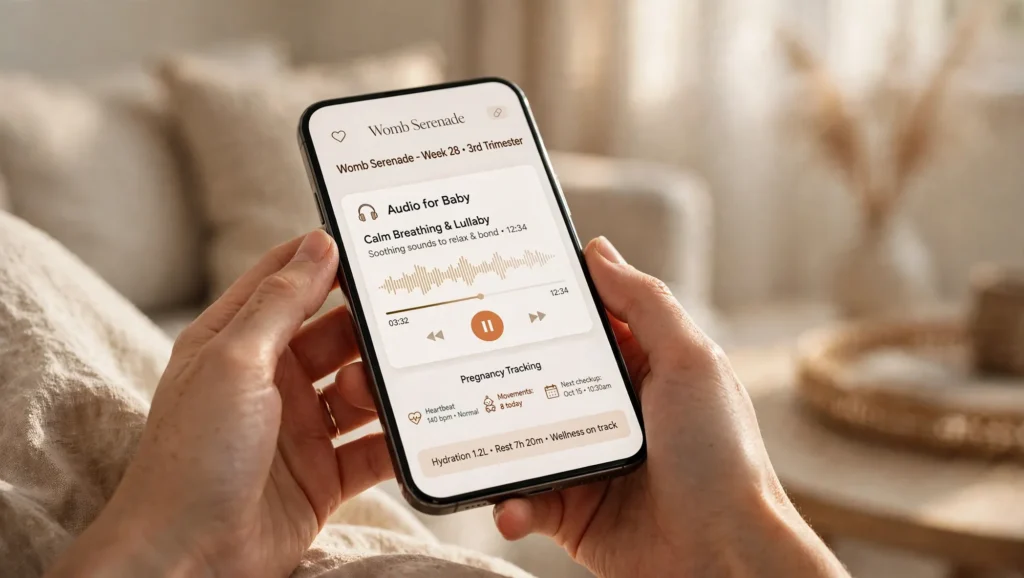
But with so many pregnancy apps available, choosing one can be difficult. Some focus primarily on pregnancy tracking, while others emphasize education, wellness, fetal development, community, journaling, appointments, or preparation for birth.
The right pregnancy companion depends on what you actually need.
Instead of choosing an app simply because it has the longest feature list, look for one that provides useful information, is easy to navigate, respects your privacy, and supports your pregnancy journey without pretending to replace professional medical care.
What Is a Pregnancy Companion App?
A pregnancy companion app is a digital tool designed to support expectant parents throughout pregnancy.
Depending on the app, it may provide features such as:
- Pregnancy week tracking
- Estimated due-date information
- Pregnancy milestones
- Baby development information
- Appointment reminders
- Symptom tracking
- Pregnancy education
- Journaling
- Wellness resources
- Prenatal bonding activities
- Relaxation or audio content
- Birth preparation
- Postpartum information
Some digital maternity platforms go further by connecting patients with their actual maternity records and care teams. For example, NHS maternity systems such as Badger Notes can provide access to pregnancy timelines, appointments, selected maternity records, care information, personal notes, and questions for the care team.
Other pregnancy apps are designed primarily as educational and wellness companions.
Understanding this distinction is important when deciding which type of app is appropriate for you.
Why Use a Pregnancy App?
Pregnancy can feel overwhelming simply because there is so much to remember.
A pregnancy app can help you organize information and make certain parts of the journey easier to follow.
It can help you understand your pregnancy stage
A week-by-week timeline can provide general information about what may be happening during different stages of pregnancy.
It can help you remember important dates
Appointments, scans, tests, and preparation tasks can be easier to organize when they are in one place.
It can help you document your experience
Some apps allow you to add notes, photographs, journal entries, or milestones.
It can provide educational resources
Instead of searching randomly across the internet, you may be able to access pregnancy information organized around your current stage.
It can create meaningful routines
Features such as mindfulness, music, journaling, or prenatal bonding can help turn the app into more than a simple pregnancy countdown.
1. Look for Accurate and Trustworthy Pregnancy Information
One of the most important features of a pregnancy app is the quality of its information.
Pregnancy information should be:
- Clear
- Evidence-informed
- Appropriately sourced
- Written in understandable language
- Updated when necessary
- Careful about medical claims
An app should not make exaggerated promises about pregnancy, fetal development, or health outcomes.
Be especially cautious about apps that present general information as though it were personalized medical advice.
A pregnancy app can help you learn.
It should not pretend to diagnose you.
2. Look for Week-by-Week Pregnancy Tracking
A week-by-week timeline is one of the most recognizable features of pregnancy apps.
A useful timeline may show:
- Current pregnancy week
- Trimester
- General pregnancy changes
- Baby development information
- Upcoming milestones
- Relevant educational content
This can help you understand where you are in the overall pregnancy journey.
However, week-by-week information should be treated as a general guide.
Pregnancy symptoms and developmental experiences vary from person to person.
For a broader guide, explore our article on pregnancy week by week.
3. Check Whether the App Includes Pregnancy Milestones
A good pregnancy companion can help you recognize important moments throughout the journey.
These may include:
- Pregnancy confirmation
- First prenatal appointment
- Ultrasound appointments
- First-trimester milestones
- First noticeable fetal movement
- Mid-pregnancy scan
- Third-trimester preparation
- Birth preparation
- Postpartum planning
Some milestones are medical, while others are personal.
An app can give you space to record both.
Our guide to [pregnancy milestones] provides a more detailed look at important moments throughout each trimester.
4. Look for Appointment and Reminder Features
Pregnancy can involve multiple appointments and important dates.
A useful app may allow you to record or receive reminders for:
- Prenatal appointments
- Ultrasounds
- Screening appointments
- Blood tests
- Birth classes
- Preparation tasks
- Other important dates
Some maternity apps go further by integrating appointment information directly with a healthcare provider’s system. For example, NHS maternity platforms can display booked appointments and information shared by maternity professionals.
If an app does not connect to your healthcare provider, it can still function as a personal reminder and organization tool.
5. Consider Symptom Tracking
Pregnancy symptoms can change over time.
A pregnancy app may allow you to record experiences such as:
- Nausea
- Fatigue
- Headaches
- Heartburn
- Back discomfort
- Sleep changes
- Appetite changes
- Mood
- Other personal observations
This can help you remember what you experienced and give you something to discuss with your healthcare professional.
However, symptom tracking should not become self-diagnosis.
If you experience a concerning or unusual symptom, contact your healthcare professional rather than relying on an app’s interpretation.
6. Look for a Place to Record Questions
This is a feature that can be surprisingly useful.
Pregnancy questions often appear at inconvenient times.
You may suddenly wonder:
“Is this symptom normal?”
“Can I continue this exercise?”
“When is my next scan?”
“What should I ask about at my next appointment?”
An app that allows you to save questions can help you remember them later.
Some digital maternity systems also allow expectant parents to submit thoughts and questions for their care team to review.
Even if your pregnancy app does not connect to your healthcare provider, having a private question list can still be valuable.
7. Consider Journaling and Personal Memories
Pregnancy is not only a medical experience.
It is also a personal one.
A pregnancy companion can become more meaningful if it allows you to record:
- How you are feeling
- Important memories
- Photos
- Milestones
- Messages to your baby
- Favorite pregnancy moments
- Thoughts about becoming a parent
Digital maternity systems already demonstrate how personal diary entries and photos can be incorporated into pregnancy timelines.
If you prefer physical journals, you do not need an app for this.
But having everything in one digital space can be convenient.
8. Look for Personalized Information
Not every pregnancy requires the same information at the same time.
A useful pregnancy companion should ideally make it easy to find information relevant to your current stage.
For example:
First trimester:
Early pregnancy, appointments, nutrition, symptoms, and emotional adjustment.
Second trimester:
Fetal movement, changing body, anatomy scans, wellness, and prenatal bonding.
Third trimester:
Birth preparation, physical comfort, fetal movement, postpartum planning, and newborn preparation.
Personalization should make information easier to navigate without suggesting that an app can replace individualized medical care.
9. Consider Pregnancy Wellness Features
Pregnancy is more than fetal development.
Your own wellbeing matters too.
Depending on your needs, you might look for features related to:
- Relaxation
- Mindfulness
- Sleep
- Self-care
- Stress management
- Appropriate physical activity
- Emotional wellbeing
- Prenatal bonding
This can make an app feel more like a pregnancy companion rather than simply a countdown clock.
For more information, explore our guide to pregnancy wellness.
10. Look for Relaxation and Audio Features
Audio can provide another way to interact with a pregnancy app.
Instead of always reading information on a screen, you might want something you can listen to while:
- Resting
- Journaling
- Preparing for bed
- Taking a break
- Practicing mindfulness
- Spending quiet time with your partner
- Creating a prenatal bonding routine
Audio features can include:
- Calming music
- Relaxation audio
- Guided breathing
- Meditation
- Pregnancy-focused audio experiences
- Educational audio
The most useful feature depends on your personal preferences.
For people who enjoy music during pregnancy, an audio-first experience can make a pregnancy companion feel more natural as part of everyday routines.
11. Look for Prenatal Bonding Features
Some expectant parents want their pregnancy app to support emotional connection as well as tracking.
A companion may include ideas for:
- Talking to your baby
- Listening to music
- Reading aloud
- Journaling
- Partner activities
- Quiet reflection
- Pregnancy rituals
These activities are not about guaranteeing a particular outcome for your baby.
Instead, they provide opportunities to slow down and experience pregnancy intentionally.
Explore our guides on how to bond with your baby during pregnancy and prenatal bonding activities for additional ideas.
12. Consider Partner and Family Features
Pregnancy involves more than one person.
If you have a partner or support network, you may appreciate features that make it easier to share parts of the pregnancy journey.
Depending on the app, this could include:
- Shared milestones
- Pregnancy information for partners
- Bonding activities
- Birth preparation
- Shared reminders
- Educational resources
Even when an app does not have dedicated partner features, you can still use its content as a starting point for conversations and shared routines.
13. Check Privacy and Data Protection Carefully
Privacy deserves special attention when choosing a pregnancy app.
Pregnancy information can include highly personal health data.
Before creating an account, look at the app’s privacy policy and consider:
- What information does the app collect?
- Why is the information collected?
- Is an account required?
- Does the app share information with third parties?
- How is information stored?
- Can you delete your account?
- Can you delete your personal information?
- Does the app use analytics or advertising technologies?
- What permissions does the app request?
Health-related apps can handle sensitive information, so understanding how your data is used is important.
Protecting sensitive women’s health information, while NHS digital health services publish detailed privacy information explaining how personal and health data are handled.
Do not assume that an app is private simply because it is popular.
Read the privacy information.
14. Pay Attention to App Permissions
When installing an app, look at the permissions it requests.
Ask whether the permissions make sense for the features you are using.
For example, an app designed for pregnancy education may not need access to every type of information on your phone.
Permissions can change over time, so reviewing them occasionally is a useful privacy habit.
15. Look for a Simple and Accessible User Experience
A pregnancy app can have dozens of features and still be frustrating to use.
Good usability matters.
Look for:
- Clear navigation
- Easy-to-read text
- Simple menus
- Fast loading
- Accessible design
- Logical organization
- Minimal unnecessary notifications
- Easy access to important information
If you have to navigate through multiple screens just to find your current pregnancy week, the app may not be serving you well.
16. Consider Notification Settings
Notifications can be useful.
They can remind you about appointments, milestones, educational content, or routines.
But too many notifications can become stressful.
Look for an app that allows you to control:
- Notification frequency
- Reminder types
- Promotional notifications
- Educational notifications
- Appointment reminders
- Audio or wellness reminders
A pregnancy companion should support your routine rather than constantly interrupt it.
17. Look for Useful Postpartum Support
Pregnancy eventually becomes postpartum life.
An app that continues supporting you after birth may provide additional value.
Depending on the product, postpartum features might include:
- Recovery information
- Emotional wellbeing resources
- Newborn education
- Feeding information
- Postpartum milestones
- Self-care
- Mental health resources
- Support resources
Not every pregnancy app needs to include postpartum features, but they can make the transition between pregnancy and early parenthood easier to navigate.
18. Check Whether the App Is Available in Your Language
Pregnancy information is more useful when you can understand it comfortably.
If English is not your preferred language, look for an app that supports your language.
You may also want to check whether:
- Educational content is translated
- Audio content is available in your language
- Notifications are translated
- Support resources are relevant to your location
Language accessibility can make a significant difference in how useful a pregnancy companion feels.
19. Look for Evidence-Informed Content Rather Than Big Promises
Be cautious when an app makes dramatic claims.
For example, be skeptical of claims suggesting that a specific feature can:
- Guarantee a certain fetal outcome
- Make a baby smarter
- Diagnose pregnancy complications
- Replace prenatal care
- Prevent all pregnancy anxiety
- Guarantee an easier birth
A trustworthy pregnancy companion should explain what its features are designed to support without exaggerating their medical effects.
The NHS also distinguishes digital information and support tools from the role of healthcare professionals and clinical care. Digital maternity platforms can complement care by providing access to records, information, and communication, but they do not eliminate the need for professional care.
20. Decide Whether You Want an All-in-One App or a Specialized App
Not everyone needs the same type of pregnancy app.
An all-in-one pregnancy companion may be useful if you want:
- Pregnancy tracking
- Education
- Milestones
- Wellness
- Journaling
- Audio
- Self-care
- Prenatal bonding
A specialized app may be better if you primarily want:
- Appointment management
- Medical records
- Fetal movement tracking
- Meditation
- Pregnancy exercise
- Nutrition
- Community support
There is nothing wrong with using more than one app if each serves a different purpose.
The important thing is understanding what each app actually does.
What Makes Womb Serenade Different?
Many pregnancy apps are primarily designed around tracking.
Womb Serenade takes a broader approach.
It combines pregnancy-focused audio with elements of pregnancy tracking, education, milestones, wellness, and intentional connection.
Instead of opening an app only to check what week you are in, you can incorporate it into different parts of your day.
For example:
Morning:
Check your pregnancy progress and explore relevant information.
Afternoon:
Take a short break with calming audio.
Evening:
Create a quiet prenatal bonding or relaxation routine.
Weekly:
Reflect on your pregnancy milestone and record something meaningful.
This creates a pregnancy experience that is not only about tracking what is happening but also about how you experience the journey.
Womb Serenade as an Audio-First Pregnancy Companion
Audio is one of the ways Womb Serenade can complement traditional pregnancy tracking.
For an expectant mother who enjoys music, audio can become part of existing routines rather than another task.
You might listen while:
- Resting
- Journaling
- Preparing for sleep
- Practicing mindfulness
- Spending time with your partner
- Reflecting on pregnancy milestones
- Creating a prenatal bonding ritual
The goal is not to claim that music can replace medical treatment or produce guaranteed fetal benefits.
It is about creating intentional moments of relaxation, reflection, and connection during pregnancy.
A Simple Checklist for Choosing a Pregnancy App
Before downloading a pregnancy app, ask yourself:
Information
- Is the content trustworthy?
- Is it written clearly?
- Are medical claims appropriately qualified?
Tracking
- Can I track my pregnancy week?
- Can I record milestones?
- Can I organize appointments or questions?
Wellness
- Does it support relaxation?
- Does it include useful self-care resources?
- Does it support emotional wellbeing?
Connection
- Can I journal?
- Can I record memories?
- Does it provide prenatal bonding ideas?
Audio
- Does it offer music or other audio?
- Can I use it during relaxation or bedtime?
Privacy
- What personal information does it collect?
- How is my data used?
- Can I control or delete my information?
Usability
- Is it easy to navigate?
- Can I control notifications?
- Is it accessible on my device?
Medical boundaries
- Does the app clearly explain that it does not replace professional care?
- Does it direct users to healthcare professionals when appropriate?
If an app performs well across the areas that matter most to you, it may be worth exploring further.
Common Mistakes When Choosing a Pregnancy App
Choosing an app because it has the most features
More features do not necessarily mean a better experience.
Choose features you will actually use.
Ignoring privacy
Pregnancy data can be sensitive.
Read the privacy policy before entering personal information.
Treating app information as medical advice
General pregnancy information cannot replace individualized medical care.
Comparing your pregnancy to the app’s timeline
Pregnancy timelines describe general patterns.
Your individual experience may differ.
Allowing notifications to become overwhelming
Customize notifications so the app supports your day rather than interrupting it.
Downloading multiple apps without a clear purpose
Five apps can create more confusion than one well-organized companion.
Start with the features you actually need.
How to Get More Value From a Pregnancy Companion
Once you choose an app, use it intentionally.
You could create a weekly pregnancy ritual:
Step 1: Check your pregnancy week
See where you are in the overall pregnancy journey.
Step 2: Review your upcoming appointments
Make sure important dates are recorded.
Step 3: Reflect on the week
Write down one physical or emotional observation.
Step 4: Record a milestone
Capture something meaningful that happened.
Step 5: Learn something
Read one reliable piece of pregnancy education.
Step 6: Relax
Listen to calming audio or practice a short mindfulness exercise.
Step 7: Connect
Spend a few quiet minutes talking, reading, listening to music, or reflecting on your baby.
This turns an app from something you occasionally open into a supportive part of your pregnancy routine.
Frequently Asked Questions About Pregnancy Apps
What should I look for in a pregnancy app?
Look for trustworthy pregnancy information, week-by-week tracking, milestones, appointment organization, useful wellness resources, privacy controls, easy navigation, and features that match your personal needs.
Are pregnancy apps accurate?
The quality of pregnancy apps varies. Look for apps that provide evidence-informed information, clearly distinguish general education from medical advice, and identify credible sources where appropriate.
Can a pregnancy app replace prenatal care?
No. A pregnancy app can support education, organization, and everyday wellbeing, but it should not replace prenatal appointments, professional medical advice, diagnostic tests, or emergency care.
Are pregnancy apps safe to use?
A pregnancy app can be a useful tool, but safety depends on the quality of its information, how it handles personal data, and how you use it. Review the app’s privacy practices and avoid relying on it to diagnose or manage medical problems.
Should a pregnancy app track symptoms?
Symptom tracking can be useful for keeping personal notes and preparing questions for your healthcare professional. However, concerning symptoms should be discussed with a qualified healthcare professional rather than relying on an app’s interpretation.
Are pregnancy apps worth using?
They can be useful if they solve a real problem for you. Some people primarily need pregnancy tracking, while others value education, journaling, relaxation, audio, or appointment organization.
What is the difference between a pregnancy tracker and a pregnancy companion?
A pregnancy tracker typically focuses on information such as pregnancy week, milestones, symptoms, and appointments.
A pregnancy companion can take a broader approach by combining tracking with education, wellness, relaxation, audio, journaling, prenatal bonding, and other everyday pregnancy experiences.
Can music be part of a pregnancy app?
Yes. Music and audio can be incorporated into relaxation, mindfulness, journaling, prenatal bonding, or bedtime routines. The benefit is primarily the experience and routine you create rather than a guaranteed medical or developmental effect.
Final Thoughts
Choosing a pregnancy app is ultimately about finding a tool that fits your pregnancy journey.
You may want detailed tracking.
You may want reliable education.
You may want appointment reminders.
You may want a private journal.
You may want relaxation and music.
Or you may want all of these experiences in one place.
The most useful pregnancy companion is not necessarily the one with the longest feature list. It is the one that provides information you can trust, respects your privacy, is easy to use, and supports the areas of pregnancy that matter most to you.
Remember that digital tools are companions not replacements for prenatal care.
Your healthcare team remains the right source for personalized medical advice, concerning symptoms, screening results, and decisions about your care.
For expectant mothers looking for something broader than a pregnancy countdown, Womb Serenade brings together audio, pregnancy tracking, milestones, education, wellness, and opportunities for intentional connection.
Pregnancy is not just about counting down the weeks.
It is about experiencing the journey.
A good pregnancy companion can help you stay informed, organized, supported, and connected along the way.