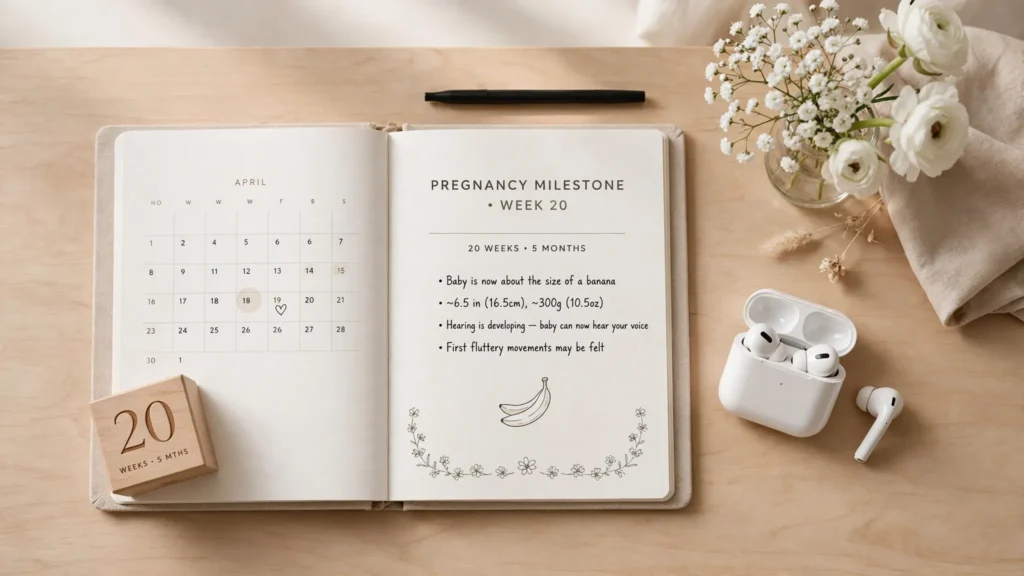
Pregnancy comes with a lot of questions.
What should you expect this week? Which symptoms are normal? When should you contact your healthcare provider? What happens during an ultrasound? How can you prepare for birth? What can you do to support your wellbeing during pregnancy?
With so much pregnancy information available online, finding reliable answers can sometimes be just as difficult as having the questions.

A search for one pregnancy symptom can produce thousands of articles, social media posts, videos, forums, and personal experiences. Some may be helpful, while others may contain outdated information, exaggerated claims, or advice that does not apply to your individual pregnancy.
That is why knowing where to find reliable pregnancy resources is an important part of navigating pregnancy.
Reliable resources can help you understand general pregnancy information, prepare questions for your healthcare team, track important milestones, and make more informed decisions about your wellbeing.
However, online resources should complement not replace personalized prenatal care.
Why Reliable Pregnancy Information Matters
Pregnancy is a period when your body and circumstances can change quickly.
You may encounter information about nutrition, exercise, medications, symptoms, fetal development, screening, childbirth, mental health, and postpartum recovery.
Unfortunately, not all information online is equally trustworthy.
A reliable pregnancy resource should ideally:
- Provide evidence-informed information
- Explain medical topics clearly
- Avoid exaggerated claims
- Distinguish general information from medical advice
- Identify credible sources
- Keep information reasonably up to date
- Encourage appropriate professional care
- Avoid creating unnecessary fear
Reliable information can help you become more informed without making you feel responsible for diagnosing yourself.
What Makes a Pregnancy Resource Reliable?
Before trusting a pregnancy website, app, article, video, or social media account, consider where the information comes from.
1. Look for Qualified or Credible Sources
Medical information is more trustworthy when it comes from recognized healthcare organizations, government health agencies, hospitals, universities, or qualified healthcare professionals.
Examples include:
- National health agencies
- Professional medical organizations
- Hospitals and health systems
- Universities and medical schools
- Peer-reviewed medical research
- Qualified healthcare professionals
The specific organizations available to you may depend on your country.
2. Check When the Information Was Published or Updated
Medical recommendations can change.
An article published many years ago may not reflect current guidance.
Look for:
- Publication dates
- Updated dates
- References
- Recent medical guidance
- Clearly identified authors or reviewers
An old article is not automatically wrong, but newer guidance may be more appropriate.
3. Be Careful With Absolute Claims
Pregnancy rarely works in absolutes.
Be cautious when a resource says:
- “This always works.”
- “This guarantees a healthy baby.”
- “Doctors don’t want you to know this.”
- “This one food will prevent complications.”
- “This music will make your baby smarter.”
- “You don’t need to see a doctor if you do this.”
Reliable health information generally acknowledges uncertainty and individual differences.
1. Start With Your Prenatal Healthcare Team
One of the most reliable pregnancy resources is the healthcare team caring for you.
Depending on where you live and your individual circumstances, this may include:
- Obstetricians
- Midwives
- Family doctors
- General practitioners
- Nurses
- Other qualified healthcare professionals
Your healthcare team knows your medical history and can provide advice that general pregnancy articles cannot.
Use online resources to prepare questions, learn general concepts, and understand terminology.
Then bring personal concerns to your healthcare professional.
2. Use Government Health Websites
Government health agencies can be valuable sources of pregnancy information because they publish public health guidance and educational resources.
Depending on your country, useful government sources may cover:
- Prenatal care
- Nutrition
- Vaccinations
- Pregnancy symptoms
- Physical activity
- Medication safety
- Mental health
- Birth preparation
- Newborn care
For example, the NHS provides a comprehensive pregnancy information hub covering pregnancy care, appointments, symptoms, week-by-week development, mental health, birth, and postnatal care.
For people in the United States, the Centers for Disease Control and Prevention (CDC) provides pregnancy-related information covering topics such as maternal health, infections, vaccinations, medications, and healthy pregnancy.
For people in other countries, look for the official health department or national public health agency serving your region.
3. Look for Professional Medical Organizations
Professional medical organizations can provide specialized information written for healthcare professionals and the public.
For example, the American College of Obstetricians and Gynecologists (ACOG) publishes patient education covering pregnancy, prenatal care, exercise, nutrition, labor, postpartum care, and many other women’s health topics.
Professional organizations can be especially useful when you want more detailed information about a specific medical topic.
4. Use Hospital and Health-System Resources
Major hospitals and healthcare systems often publish pregnancy guides for patients.
These resources may explain:
- What to expect during appointments
- Pregnancy symptoms
- Labor and delivery
- Prenatal testing
- Preparing for childbirth
- Postpartum recovery
- Newborn care
Hospital resources can be useful because they are often created or reviewed by healthcare professionals.
However, remember that recommendations can vary between healthcare systems and countries.
5. Explore Peer-Reviewed Research Carefully
Scientific research can provide valuable information about pregnancy, but research papers are not always easy to interpret.
A single study does not necessarily establish that something is safe, effective, or recommended.
When reading research, consider:
- What type of study was conducted?
- How many people participated?
- What exactly was studied?
- Were the results statistically meaningful?
- Have other studies found similar results?
- Is there a broader scientific consensus?
For many readers, professional medical organizations and evidence-based health websites are easier starting points than individual research papers.
6. Use Pregnancy Apps Carefully
Pregnancy apps can be useful for organizing information and following your pregnancy journey.
Depending on the app, you may be able to track:
- Pregnancy week
- Estimated due date
- Milestones
- Symptoms
- Appointments
- Fetal movement
- Personal notes
- Pregnancy education
- Wellness activities
However, the quality of pregnancy apps varies.
Before relying on an app, look at:
- Who created the content
- Whether medical professionals review it
- How current the information is
- What sources are used
- How personal data is handled
- Whether the app clearly distinguishes education from medical advice
An app can support your pregnancy journey, but it should not replace your healthcare team.
For more guidance, read our article on pregnancy apps and the features to look for in a pregnancy companion.
7. Choose Pregnancy Books Carefully
Books can provide a deeper explanation of pregnancy than short online articles.
A good pregnancy book may cover:
- Pregnancy development
- Nutrition
- Prenatal care
- Exercise
- Emotional wellbeing
- Birth preparation
- Postpartum recovery
When choosing a book, check the author’s qualifications and publication date.
If the book is several years old, check whether its recommendations still align with current guidance.
8. Use Pregnancy Classes and Educational Programs
Antenatal or childbirth education classes can be another valuable resource.
Depending on the program, classes may cover:
- Pregnancy changes
- Labor
- Birth
- Pain management
- Newborn care
- Feeding
- Postpartum recovery
- Emotional wellbeing
- Partner support
Classes can also give expectant parents an opportunity to ask questions and connect with others going through pregnancy.
Look for programs provided by reputable hospitals, healthcare organizations, qualified professionals, or established community services.
9. Be Careful With Social Media Pregnancy Advice
Social media can make pregnancy information easier to discover.
You can find:
- Personal pregnancy experiences
- Birth stories
- Product recommendations
- Wellness ideas
- Pregnancy tips
- Parenting communities
But personal experience is not the same as medical evidence.
Someone can have a positive experience with a particular treatment, supplement, exercise, food, or routine without that approach being appropriate for everyone.
Use social media for community and personal perspectives.
Use qualified healthcare sources for medical decisions.
10. Pregnancy Forums Can Offer Emotional Support
Online communities can help you feel less alone.
Pregnancy forums and support groups can provide opportunities to:
- Ask questions
- Share experiences
- Discuss pregnancy emotions
- Find practical ideas
- Connect with other expectant parents
However, forums should not be your primary source for medical diagnosis or treatment.
If someone online tells you that a concerning symptom is “normal,” that does not mean it is safe for you to ignore it.
When in doubt, contact your healthcare professional.
11. Look for Reliable Mental Health Resources
Pregnancy wellbeing includes emotional health.
You may experience:
- Anxiety
- Stress
- Mood changes
- Fear about childbirth
- Concerns about becoming a parent
- Relationship worries
- Financial stress
- Feelings of loneliness
Reliable pregnancy resources should provide information about mental health as well as physical health.
If you feel persistently anxious, depressed, overwhelmed, or unable to cope, speak with your healthcare professional.
You do not have to wait until your symptoms become severe before asking for help.
12. Use Reliable Resources for Pregnancy Nutrition
Nutrition is another area where online misinformation is common.
You may encounter claims about:
- Foods you must eat
- Foods you must completely avoid
- Supplements
- Herbal products
- “Pregnancy superfoods”
- Detoxes
- Weight-loss diets
Rather than following advice from an influencer or anonymous account, look for guidance from qualified healthcare professionals and recognized health organizations.
Your nutritional needs can also vary depending on your health, pregnancy, dietary pattern, and medical circumstances.
13. Check Medication Information With a Professional
Medication is an area where you should be particularly cautious.
Do not assume that a medication, supplement, herbal product, or over-the-counter treatment is safe simply because someone online says it is.
Before starting, stopping, or changing medication during pregnancy, discuss it with your healthcare professional.
This includes products marketed as:
- Natural remedies
- Herbal supplements
- Pregnancy supplements
- Sleep aids
- Pain relievers
- Cold medicines
- Weight-loss products
“Natural” does not automatically mean safe during pregnancy.
14. Find Reliable Information About Pregnancy Exercise
Physical activity can be an important part of a healthy pregnancy for many people, but recommendations depend on individual circumstances.
Reliable resources can help you understand general guidance about:
- Walking
- Swimming
- Prenatal exercise
- Strength training
- Stretching
- Yoga
- Activities to modify or avoid
Your healthcare professional can advise you about what is appropriate for your specific pregnancy.
For more general information, explore our guide to pregnancy wellness.
15. Use Reliable Resources for Pregnancy Symptoms
Search engines are often the first place people go when they experience a new pregnancy symptom.
The problem is that symptom searches can quickly become overwhelming.
One symptom can have many possible explanations.
Instead of searching dozens of websites, start with one or two reliable medical sources.
Then consider whether you need to contact your healthcare professional.
Seek professional advice promptly if a symptom is severe, sudden, unusual for you, worsening, or otherwise concerning.
16. Learn How to Recognize Pregnancy Red Flags
A reliable pregnancy resource should not only explain normal pregnancy changes.
It should also make clear when professional medical attention is needed.
Depending on your stage of pregnancy and individual circumstances, urgent symptoms may include:
- Heavy vaginal bleeding
- Severe abdominal pain
- Severe headache with vision changes
- Difficulty breathing
- Chest pain
- Fainting or severe dizziness
- Seizures
- Severe swelling or other concerning symptoms
- A significant reduction or change in your baby’s movements after a movement pattern has been established
- Signs of premature labor
This is not a complete list, and symptoms can have different meanings depending on your circumstances.
If something feels seriously wrong, contact your healthcare provider or seek urgent medical care rather than relying on an online article.
17. Learn to Distinguish Education From Medical Advice
This distinction is extremely important.
Educational information can help you:
- Understand pregnancy terminology
- Learn about common pregnancy changes
- Prepare questions
- Understand general pregnancy stages
- Explore self-care ideas
- Learn about prenatal bonding
Medical advice is individualized
Your healthcare professional can:
- Interpret your symptoms
- Review your medical history
- Interpret test results
- Assess your pregnancy
- Recommend appropriate treatment
- Tell you when urgent care is needed
A good pregnancy resource should make this distinction clear.
18. Create Your Own Reliable Pregnancy Resource List
Instead of searching for new information every time you have a question, create a small list of trusted sources.
Your list could include:
Your healthcare team
Your primary source for individualized care.
Government health agency
For public health recommendations.
Professional medical organization
For evidence-informed patient education.
Hospital or health system
For pregnancy and birth resources.
Trusted pregnancy companion
For organization, education, milestones, wellness, and daily routines.
This approach can reduce information overload.
19. Keep a Pregnancy Question List
One of the best ways to use pregnancy resources is to turn information into questions.
For example:
You read about pregnancy exercise.
Instead of deciding whether a particular exercise is right for you, write:
“Can I safely continue this exercise during my pregnancy?”
You read about a pregnancy symptom.
Write:
“I have experienced this symptom for three days. Is this something I should be concerned about?”
This keeps online information in its proper role: helping you have better conversations with your healthcare team.
20. Use Womb Serenade as Part of Your Pregnancy Resource System
Womb Serenade can serve as one layer within a broader pregnancy information system.
Rather than trying to replace medical resources, it can complement them with pregnancy-focused content around:
- Pregnancy milestones
- Pregnancy tracking
- Audio
- Relaxation
- Prenatal bonding
- Wellness
- Pregnancy education
- Reflection
- Everyday pregnancy routines
For example, you might use a trusted medical organization when researching a health question, your healthcare team for personalized advice, and Womb Serenade for pregnancy education, audio, tracking, reflection, and daily wellness routines.
This creates a healthier information journey:
Reliable medical source → Healthcare professional → Pregnancy companion → Personal routine
Each serves a different purpose.
How to Evaluate a Pregnancy Article Before Trusting It
Before accepting information from a pregnancy article, ask five questions.
Who wrote it?
Is the author identified?
Do they have relevant qualifications?
Who reviewed it?
Was the content reviewed by a healthcare professional?
When was it published or updated?
Could the information be outdated?
What evidence supports the claim?
Are credible sources provided?
Does it encourage appropriate medical care?
Reliable pregnancy information should not discourage people from seeking professional care when it is needed.
Pregnancy Information Should Make You Feel Informed, Not Frightened
One of the problems with pregnancy content online is that it can make ordinary uncertainty feel like an emergency.
You search for a common symptom and suddenly encounter dozens of frightening possibilities.
Try to avoid repeatedly searching the same concern across multiple websites.
Instead:
- Find a reliable source.
- Read the information carefully.
- Write down your questions.
- Contact your healthcare professional if you are concerned.
- Step away from the search when you have the information you need.
More information is not always better information.
Sometimes the best next step is speaking with someone who knows your pregnancy.
A Simple Pregnancy Information Routine
You can create a weekly routine for staying informed without becoming overwhelmed.
Step 1: Check your pregnancy stage
Know which week or trimester you are in.
Step 2: Read one reliable resource
Choose information relevant to your current stage.
Step 3: Record important information
Save anything you want to discuss with your healthcare professional.
Step 4: Update your questions
Add new questions to your appointment list.
Step 5: Take a break
You do not need to research pregnancy every day.
Step 6: Reflect
Use journaling, music, or another calming activity to reconnect with your pregnancy experience.
This approach can help you stay informed without allowing pregnancy information to take over your entire day.
Frequently Asked Questions About Pregnancy Resources
What are the most reliable pregnancy resources?
Reliable pregnancy resources commonly include your healthcare team, government health agencies, recognized medical organizations, hospitals and health systems, and evidence-informed educational resources.
Where can I find reliable pregnancy information online?
Start with recognized health organizations and government health agencies. In the United States, resources from organizations such as the CDC and ACOG can be useful. In the United Kingdom, the NHS provides extensive pregnancy information. Other countries have their own official health agencies.
Are pregnancy apps reliable?
Some pregnancy apps provide useful educational and tracking features, but quality varies. Check who created the content, whether healthcare professionals review it, how current the information is, and how your personal data is handled.
Can I trust pregnancy information on social media?
Social media can be useful for community and personal experiences, but it should not be treated as a primary source for medical advice. Personal experiences are not necessarily evidence that a treatment or recommendation is appropriate for everyone.
Should I search my pregnancy symptoms online?
Online resources can help you understand general symptoms, but they should not replace professional assessment. If a symptom is severe, unusual, worsening, or concerning, contact your healthcare professional.
How do I know if a pregnancy website is trustworthy?
Look for an identifiable author, credible organization, qualified medical review, current information, supporting references, and clear boundaries between general education and individualized medical advice.
Can Womb Serenade replace my healthcare provider?
No. Womb Serenade is intended as a pregnancy companion for areas such as audio, education, tracking, wellness, and reflection. It does not replace prenatal appointments, medical advice, diagnosis, treatment, or emergency care.
Final Thoughts
Finding reliable pregnancy resources can make the journey easier to navigate.
You do not need to know everything about pregnancy at once.
Start with a small group of trustworthy sources.
Use your healthcare team for personalized advice. Use government health agencies and professional medical organizations for evidence-informed information. Use reputable books, classes, hospitals, and digital resources to deepen your understanding.
And be cautious with information that makes dramatic promises, relies entirely on personal experience, or encourages you to ignore professional medical care.
Pregnancy is already a period of significant change.
The information you consume should help you feel more informed and prepared not more frightened or overwhelmed.
Womb Serenade can become one part of your broader pregnancy resource system, providing pregnancy-focused education, audio, milestones, tracking, relaxation, and opportunities for reflection and prenatal connection.
The goal is not to replace the people caring for you.
It is to help you navigate the everyday pregnancy experience with more information, intention, and support.