
Pregnancy can be an exciting time, but it can also come with physical discomfort, busy thoughts, changing emotions, and uncertainty about what lies ahead. Finding simple ways to create moments of calm can therefore become an important part of pregnancy wellness.
One option that many expectant mothers naturally turn to is music.
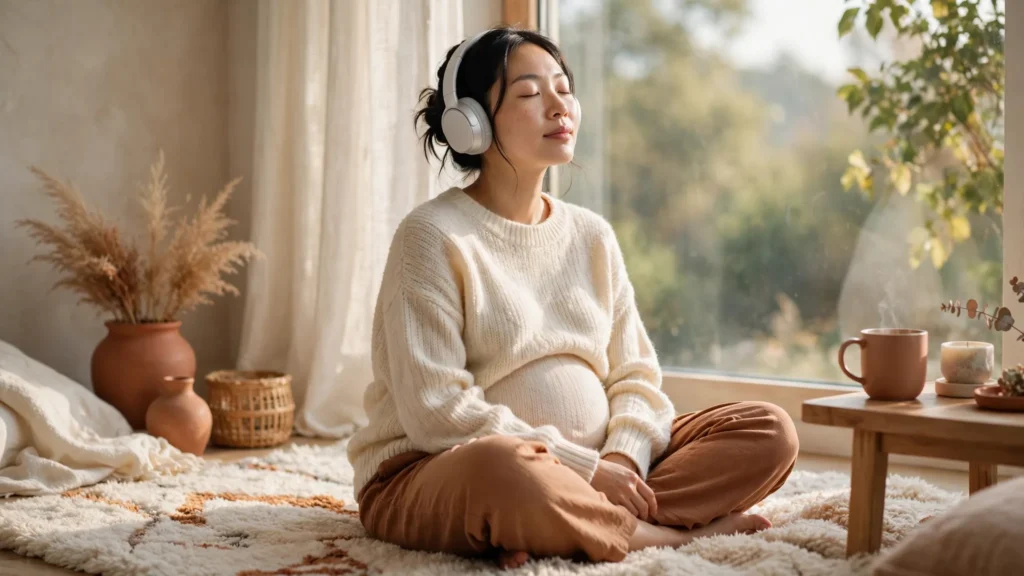
But can listening to music actually help you relax during pregnancy?
Music may be a useful part of a relaxation routine for some people. Research has explored music-based interventions during pregnancy and has found potential benefits for maternal anxiety and emotional wellbeing, although the evidence is not strong enough to treat music as a medical treatment for anxiety or other pregnancy-related conditions.
The most practical way to think about pregnancy music is as one tool that can help create a calmer environment, encourage intentional pauses, and make relaxation routines easier to maintain.
In this guide, we will explore how music may support relaxation during pregnancy, how to choose music, how to create a simple listening routine, and how Womb Serenade can fit naturally into your pregnancy wellness routine.
How Can Music Help You Relax During Pregnancy?
Music can influence the atmosphere around you and give your attention something calming to focus on.
When you intentionally choose quieter music and listen in a comfortable environment, it may become part of a broader relaxation routine.
For example, listening to music can give you an opportunity to:
- Pause from a busy day
- Focus on your breathing
- Sit or lie down comfortably
- Step away from screens
- Reflect on your pregnancy
- Practice mindfulness
- Prepare for sleep
- Create a consistent evening routine
- Spend quiet time with your partner
- Enjoy something familiar and comforting
The music itself is only one part of the experience.
Your environment, expectations, physical comfort, and the activities you pair with the music can all influence how relaxing the experience feels.
What Does the Research Say About Music and Pregnancy Relaxation?
Researchers have studied music interventions during pregnancy, particularly in relation to maternal anxiety and stress.
Some systematic reviews and clinical studies suggest that music interventions may help reduce anxiety or improve aspects of psychological wellbeing during pregnancy. However, studies differ in their methods, types of music, listening schedules, and outcomes.
This means it is more accurate to say that music may support relaxation and emotional wellbeing rather than promising that music will reliably reduce anxiety for every pregnant person.
Music should also not be viewed as a replacement for professional care when anxiety, depression, stress, or other emotional symptoms become persistent or overwhelming.
Think of music as one possible part of a broader pregnancy wellness routine.
Why Does Music Feel Relaxing to Some People?
There is no single explanation for why everyone responds to music in the same way.
Personal preference matters.
A song that makes one person feel calm might make another person feel distracted or emotional.
Music can also become associated with memories and familiar routines.
For example, if you regularly listen to a particular type of instrumental music before bed, your brain may begin to associate that sound with winding down.
This can make music useful as a routine cue.
Instead of expecting one song to instantly eliminate stress, you can use music as a signal that it is time to slow down.
What Types of Music Are Good for Relaxation During Pregnancy?
There is no medically required genre of “pregnancy relaxation music.”
The best choice is often music that you personally find comfortable and enjoyable.
You might try:
Instrumental Music
Instrumental tracks can provide a calm background without demanding attention from lyrics.
Classical Music
Some people find classical compositions relaxing, particularly slower or softer pieces.
You do not need to listen to classical music simply because you are pregnant, though.
Acoustic Music
Gentle acoustic tracks can create a warm, familiar atmosphere.
Ambient Music
Slow, atmospheric sounds can work well during meditation, breathing exercises, or quiet reflection.
Nature Sounds
Rain, ocean sounds, forests, and other natural soundscapes can be relaxing for some people.
Personal Favorites
Sometimes familiar music is the most comforting choice.
If a song consistently makes you feel happy, peaceful, or emotionally grounded, there is no reason to avoid it simply because it does not fit a particular “pregnancy playlist” category.
Is Classical Music Better for Relaxation During Pregnancy?
Not necessarily.
Classical music is often recommended in pregnancy discussions, but there is no requirement to choose it over other types of music.
Relaxation is highly personal.
If classical music helps you feel calm, use it.
If acoustic music, instrumental music, soft pop, jazz, ambient music, or another genre works better for you, that is also reasonable.
The goal is not to find the objectively “best” pregnancy music.
The goal is to find sounds that help create an environment in which you feel comfortable and able to slow down.
Does Music Need to Be Specifically Designed for Pregnancy?
No.
Music does not need to be labeled “prenatal” or “pregnancy music” to be part of a relaxation routine.
What matters more is whether the listening experience is comfortable and appropriate for you.
A pregnancy-focused audio platform can make it easier to discover tracks and build a routine, but you can also create your own playlist from music you already enjoy.
Can Music Help With Pregnancy Stress?
Music may be one useful strategy for managing everyday stress.
However, it is important to distinguish between everyday stress and a mental health condition requiring professional support.
For everyday stress, music can be combined with:
- Slow breathing
- Gentle movement
- Mindfulness
- Journaling
- Rest
- Talking with someone you trust
- Spending time outdoors
- Taking a break from screens
- Creating a consistent bedtime routine
If you are experiencing persistent anxiety, depression, panic, severe distress, or difficulty functioning, speak with your healthcare provider rather than relying on music alone.
Can Music Help With Pregnancy Anxiety?
Music may help some people feel calmer, but it should not be presented as a treatment for pregnancy anxiety.
If you occasionally feel worried about your pregnancy, a few minutes of calming music may help you create space to breathe and refocus.
But if anxiety is persistent, intense, or interfering with your daily life, professional support is important.
You can use music alongside appropriate mental health support rather than instead of it.
Can Music Help You Sleep During Pregnancy?
Music can be included in a bedtime routine if you find it relaxing.
For example, you might:
- Dim the lights.
- Put your phone away or reduce screen use.
- Get physically comfortable.
- Play quiet music.
- Take several slow breaths.
- Let your attention settle on the music.
- Transition into sleep when you feel ready.
Music will not solve every pregnancy-related sleep difficulty, especially when physical discomfort or frequent nighttime waking is involved.
But it can become a consistent signal that your day is winding down.
How Loud Should Music Be During Pregnancy?
Comfortable volume is generally the simplest approach.
The main concern is not ordinary music listening but very loud or prolonged noise exposure.
The CDC advises pregnant people to avoid areas louder than 115 dBA and recommends reducing exposure to hazardous noise. It also notes that hearing protection does not completely protect a developing fetus from external noise.
For everyday listening, you generally do not need to measure every song with a sound meter.
Instead:
- Keep the volume comfortable.
- Avoid turning music up excessively.
- Move away from very loud speakers.
- Take breaks from loud environments.
- Avoid prolonged exposure to extremely loud noise.
If you work in a consistently noisy environment, discuss the exposure with your healthcare provider and workplace safety professional.
Should You Put Headphones on Your Belly?
There is no need to place headphones directly on your abdomen to play music to your baby.
Your baby can be exposed to sounds through the surrounding environment as hearing develops.
NHS guidance advises against placing headphones directly on the bump because the sound may be too loud for the baby.
If you want to listen to music, simply listen normally at a comfortable volume.
Can You Use Earbuds While Listening to Pregnancy Music?
You can listen to music through earbuds or headphones if that is comfortable for you.
The important consideration is volume.
Avoid using very high volume levels for extended periods, and give yourself breaks when listening for long periods.
If you prefer speakers, comfortable low-volume listening in a quiet room can work just as well.
Can Music Be Part of Prenatal Bonding?
Yes.
Music can become a simple way to create intentional moments during pregnancy.
You might choose one song that you enjoy and listen to it while:
- Resting
- Journaling
- Talking to your baby
- Sitting quietly
- Practicing breathing
- Reflecting on your pregnancy
- Spending time with your partner
The value is not necessarily that the music produces a direct developmental effect for your baby.
Instead, the music can help create a meaningful moment for you.
A 10-Minute Music Relaxation Routine During Pregnancy
You do not need an hour-long meditation session to benefit from a calming routine.
Try this simple 10-minute practice.
Minute 1: Get Comfortable
Sit or lie down in a position that feels comfortable for you.
Place your phone somewhere you will not be tempted to check it.
Minutes 2–3: Slow Your Breathing
Take slow, comfortable breaths.
Do not force deep breathing if it feels uncomfortable.
Simply notice the movement of your breathing.
Minutes 4–7: Listen
Play a calming song or instrumental track.
Instead of trying to stop every thought, gently bring your attention back to the music whenever your mind wanders.
Minutes 8–9: Reflect
Think about how your body feels.
You might place your hand on your belly and spend a quiet moment reflecting on your pregnancy.
Minute 10: Transition
When the music ends, take a moment before immediately returning to your phone or daily responsibilities.
Ask yourself:
“What do I need right now?”
You might need rest, food, water, movement, conversation, or simply another few quiet minutes.
Create a Pregnancy Music Routine That Fits Your Day
A relaxation routine works better when it is realistic.
You could create different listening moments depending on your schedule.
Morning Music
Start your day with gentle music while getting ready.
Midday Reset
Take five or ten minutes to step away from work or household responsibilities.
Evening Wind-Down
Use calming music as part of your bedtime preparation.
Weekend Relaxation
Set aside a longer period for music, journaling, reading, or quiet reflection.
You do not need to listen every day.
Consistency can be helpful, but flexibility matters more.
How Womb Serenade Can Support a Pregnancy Relaxation Routine
Womb Serenade can fit naturally into a pregnancy relaxation routine by providing an audio-focused environment designed around pregnancy and intentional listening.
Instead of thinking of it as something you need to use for a specific number of minutes every day, you can incorporate it into moments that already exist in your routine.
For example:
After work:
Use a short listening session to transition out of work mode.
Before bed:
Pair calming audio with your existing nighttime routine.
During journaling:
Use music as a quiet background while reflecting on your pregnancy.
During prenatal bonding:
Listen to a favorite track while thinking about your baby.
During a stressful day:
Take a few minutes to step away, breathe, and listen.
Womb Serenade is designed to complement pregnancy wellness and prenatal care. It should not be used as a substitute for medical or mental health support.
Music and Mindfulness During Pregnancy
Music can work particularly well alongside mindfulness.
Instead of listening passively, use the music as an anchor for your attention.
Notice:
- The rhythm
- The instruments
- Changes in volume
- The beginning and ending of sounds
- Your breathing
- Your physical sensations
- Your thoughts
You do not need to empty your mind.
Mindfulness is about noticing what is happening without constantly trying to change it.
Music and Breathing Exercises
You can also pair music with simple breathing.
Choose a calm track and allow your breathing to settle naturally.
Try:
Inhale gently.
Exhale slowly.
Continue at a comfortable pace while keeping your attention on the music.
Do not force your breathing to match the rhythm of the song.
The purpose is simply to create a calmer environment.
If any breathing exercise makes you uncomfortable or lightheaded, stop and return to normal breathing.
Music During Pregnancy Can Be Personal
One of the biggest mistakes is assuming there is one correct way to use music during pregnancy.
There isn’t.
Your preferences may change throughout pregnancy.
One day you might want:
- Silence
Another day:
- Instrumental music
Another:
- Your favorite upbeat songs
And another:
- Nature sounds
Your emotional and physical needs can change from one day to another.
Allow your listening routine to change with you.
Common Mistakes to Avoid
Choosing Music Because You Think It Will Make Your Baby Smarter
There is no need to choose music based on claims that it will increase your baby’s intelligence.
Enjoy music because it makes your pregnancy experience more pleasant.
Turning the Volume Up Too High
Louder does not mean more beneficial.
Keep listening comfortable and avoid prolonged exposure to extremely loud sound.
Putting Speakers or Headphones Directly Against Your Belly
There is no need to do this.
Normal listening is enough.
Treating Music as Medical Treatment
Music can be part of wellness and relaxation, but it is not a replacement for medical or mental health care.
Making Relaxation Another Pregnancy Task
You do not need to complete a perfect routine every day.
Five peaceful minutes can be more realistic than forcing yourself through a 30-minute routine when you are exhausted.
When Music Is Not Enough
Music can be a useful self-care tool, but there are times when additional support is important.
Speak with your healthcare provider if you are experiencing:
- Persistent anxiety
- Frequent panic
- Ongoing sadness
- Feelings of hopelessness
- Difficulty functioning
- Severe emotional distress
- Difficulty caring for yourself
- Thoughts of harming yourself or someone else
If you are in immediate danger or think you may harm yourself or your baby, seek urgent emergency or professional help.
Using music alongside professional support can be part of a broader approach to wellbeing.
Frequently Asked Questions
Can listening to music help you relax during pregnancy?
It may. Research has found potential benefits of music-based interventions for maternal anxiety and emotional wellbeing during pregnancy, although the evidence varies. Music is best viewed as one possible relaxation tool rather than a medical treatment.
What is the best music to listen to during pregnancy for relaxation?
There is no single best genre. Instrumental, classical, acoustic, ambient, nature sounds, and familiar personal favorites can all work if they help you feel comfortable and relaxed.
How long should I listen to music during pregnancy?
There is no medically required amount of time. Even a few minutes can become part of a relaxation routine. Choose a duration that fits comfortably into your day.
Can I listen to music with headphones while pregnant?
Yes, you can generally use headphones or earbuds for personal listening at a comfortable volume. Avoid excessively loud listening and prolonged exposure to high volume.
Can I put headphones on my belly for my baby?
There is no need to do this. NHS guidance advises against placing headphones directly on the bump because the sound may be too loud for the baby.
Can music reduce pregnancy anxiety?
Music may help some people feel calmer, but it should not be relied upon as treatment for significant pregnancy anxiety. If anxiety is persistent or interfering with your life, speak with your healthcare provider.
Is classical music better than other music during pregnancy?
No specific genre is required. Choose music that you personally find enjoyable and relaxing.
Can music help with sleep during pregnancy?
Music can be incorporated into a relaxing bedtime routine and may help create a calm environment. However, pregnancy-related sleep difficulties can have many causes, and music will not address all of them.
Does playing music during pregnancy benefit the baby?
Your baby can hear sounds as hearing develops, but claims that playing specific music directly improves intelligence or fetal development are not established. Music can still be valuable as a source of relaxation, enjoyment, and prenatal bonding for parents.
Final Thoughts
Listening to music during pregnancy does not have to be complicated.
You do not need a special playlist, expensive headphones, a particular musical genre, or a strict listening schedule.
Choose music you enjoy. Keep the volume comfortable. Give yourself time away from excessively loud environments. And most importantly, use music as an opportunity to create moments when you can slow down and take care of yourself.
For some expectant mothers, those moments may become part of a larger pregnancy wellness routine involving mindfulness, journaling, relaxation, and prenatal bonding.
Music cannot replace medical care, but it can be a simple and enjoyable way to make space for calm during an important period of your life.