
Pregnancy can bring many beautiful moments, but it can also come with physical discomfort, busy schedules, emotional changes, and plenty of things to think about.
Finding a few quiet moments during the day can make a difference in how you experience your pregnancy.
One simple approach is to create a relaxing pregnancy music routine.

Music can become part of a morning ritual, an afternoon break, an evening wind-down, or a prenatal bonding routine. You don’t need an elaborate playlist or a complicated schedule. A few minutes of intentional listening may be enough to create a peaceful pause in your day.
The key is to create a routine that feels enjoyable and realistic rather than another obligation you have to complete.
In this guide, we’ll explore how to create a relaxing pregnancy music routine, what types of music you might include, how to fit it into different parts of your day, and how you can combine music with relaxation and prenatal bonding.
What Is a Pregnancy Music Routine?
A pregnancy music routine is a simple, intentional period of listening to music during pregnancy.
Unlike casually playing music in the background while doing other things, a routine gives you an opportunity to slow down and focus on the experience.
Your routine might last:
- 5 minutes
- 10 minutes
- 15 minutes
- 20 minutes
- Or however long feels comfortable for you
There is no required duration.
The purpose isn’t to listen for a specific number of minutes or achieve a particular outcome. Instead, it is about creating a predictable moment in your day where you can relax, reflect, and enjoy music.
For some expectant mothers, this may also become an opportunity for prenatal bonding.
Why Create a Relaxing Music Routine During Pregnancy?
There are several practical reasons to incorporate music into your pregnancy routine.
1. It Creates a Moment to Slow Down
Pregnancy can be busy.
Between work, appointments, household responsibilities, preparation for the baby, and everyday life, it can be easy to go through the entire day without taking a genuine break.
A short music routine creates a natural reminder to pause.
2. It Can Become Part of Your Self-Care Routine
Self-care during pregnancy doesn’t have to involve complicated activities.
A comfortable chair, a glass of water, a few minutes of music, and some quiet time can become a simple form of everyday self-care.
3. It Can Support Relaxation
If you associate certain music with calm environments, listening to it may help you create a more relaxing atmosphere.
Music isn’t a substitute for professional care or treatment for anxiety or other mental health concerns, but it can be one small part of a broader approach to looking after your wellbeing.
4. It Can Create an Opportunity for Prenatal Bonding
You can combine your music routine with other forms of prenatal connection.
For example, you might listen to a favorite piece of music while sitting quietly, talking to your baby, reflecting on your pregnancy, or simply enjoying the moment.
If you’re interested in developing this into a more intentional practice, explore our guide on how to create a daily prenatal bonding routine.
How to Create a Relaxing Pregnancy Music Routine
You don’t need to make the process complicated.
Follow these steps to create a routine that fits naturally into your pregnancy.
Step 1: Choose a Time That Works for You
The best routine is one you can realistically maintain.
Don’t choose a time simply because someone else recommends it.
Think about your normal day.
Would you prefer:
- Early morning?
- During an afternoon break?
- After work?
- Before dinner?
- Before bed?
- During a weekend rest period?
For many people, evening can be a natural time because there are fewer responsibilities competing for attention.
However, morning listening can work just as well if that’s when you have more peace and privacy.
The important thing is consistency not perfection.
Step 2: Choose a Comfortable Place
Your environment can influence your experience.
You don’t need a special meditation room.
You could listen:
- In your bedroom
- On a comfortable sofa
- In a quiet corner
- On your balcony
- In your garden
- During a gentle walk
- While sitting comfortably outdoors
If you’re listening specifically for relaxation, reduce distractions where possible.
Put your phone on silent, close unnecessary apps, and give yourself permission to stop multitasking for a few minutes.
Step 3: Create a Small Pregnancy Music Playlist
You don’t need hundreds of songs.
Start with a small collection of music that you personally find pleasant and calming.
You might include:
Instrumental Music
Instrumental tracks can provide a calming background without competing with lyrics or conversation.
Classical Music
If you enjoy classical music, include pieces that you personally find relaxing.
You don’t have to choose classical music simply because it is often associated with pregnancy music.
Ambient Music
Gentle ambient sounds or atmospheric music can work well for quiet reflection.
Soft Acoustic Music
If acoustic music helps you feel comfortable, it can be part of your routine.
Personal Favorites
Don’t overlook music that already has emotional meaning to you.
A song doesn’t need to be specifically marketed as “prenatal music” to be meaningful during pregnancy.
Your own preferences matter.
Step 4: Keep the Volume Comfortable
You don’t need loud music to make your routine effective.
Keep your listening volume at a comfortable level.
If you’re using headphones or speakers, there is no need to place them directly against your abdomen.
The purpose of the routine is to create an enjoyable listening environment for you.
If you’re unsure about sound exposure during pregnancy, especially in unusual or occupational circumstances, speak with your healthcare professional.
Step 5: Start With Five Minutes
One of the biggest mistakes people make when creating a new routine is starting too ambitiously.
You don’t need to begin with a 30-minute session.
Start with five minutes.
For example:
Minute 1: Sit comfortably and take a few slow breaths.
Minutes 2–4: Listen to your selected music without multitasking.
Minute 5: Take a moment to notice how you feel.
If five minutes feels good, you can gradually extend your routine.
If five minutes is all you have that day, that’s perfectly fine.
Step 6: Add a Simple Breathing Exercise
You can make your music routine more intentional by combining it with slow breathing.
Try this:
- Sit or lie in a comfortable position.
- Relax your shoulders.
- Breathe in gently.
- Breathe out slowly.
- Continue at a comfortable pace while listening to your music.
Don’t force your breathing or try to hold your breath for long periods.
The goal is simply to give yourself something calm and repetitive to focus on.
Step 7: Make It a Prenatal Bonding Moment
Your pregnancy music routine doesn’t have to be only about relaxation.
It can also become a simple prenatal bonding ritual.
While listening, you might:
- Talk quietly to your baby
- Sing along
- Think about your baby
- Reflect on your pregnancy journey
- Place your hands comfortably on your bump
- Share the experience with your partner
- Write down a thought or feeling
There is no single correct way to bond with your baby before birth.
Some parents feel emotionally connected very early, while others develop that feeling gradually.
If you don’t immediately feel a strong bond, don’t pressure yourself.
Pregnancy is a different experience for everyone.
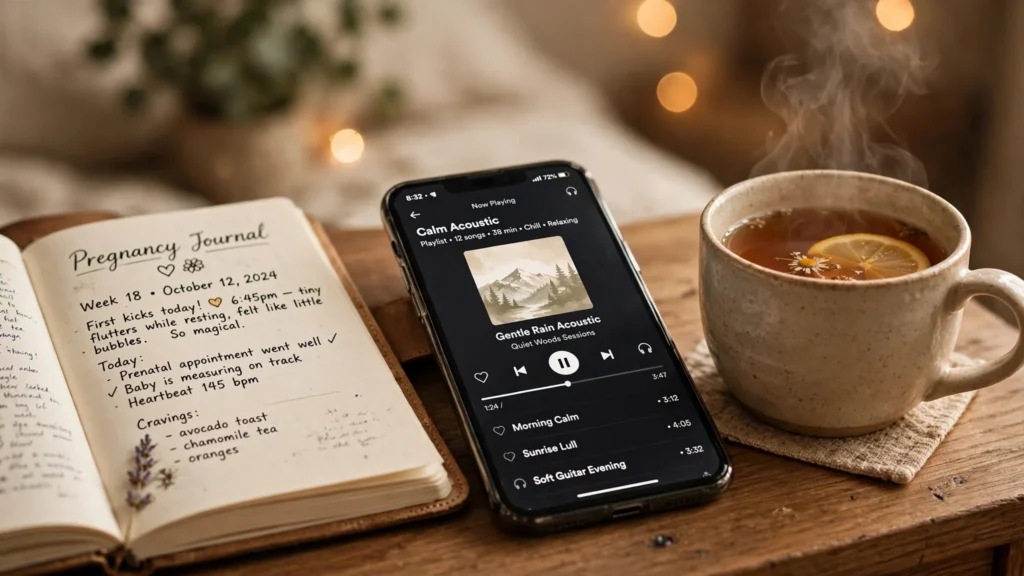
Step 8: Keep a Pregnancy Music Journal
If you enjoy journaling, consider keeping a simple record of your music routine.
You could write:
Date:
Music:
How I felt before:
How I felt afterward:
Something I’m thinking about today:
Something I’m looking forward to:
Over time, this can become a meaningful record of your pregnancy.
You may even discover that certain songs become associated with specific moments, weeks, or memories.
Step 9: Create Different Playlists for Different Moments
Instead of having one enormous playlist, consider creating smaller playlists based on how you want to use them.
Morning Pregnancy Playlist
Choose gentle, positive music that helps you start your day.
Midday Reset Playlist
Keep this playlist short perhaps 5 to 10 minutes for a quick break.
Evening Relaxation Playlist
Use slower, quieter music that helps you transition away from the day’s activities.
Prenatal Bonding Playlist
Choose music that has personal meaning or helps you feel emotionally connected to your pregnancy.
Bedtime Playlist
Select gentle tracks that fit naturally into your nighttime routine.
Creating these categories makes it easier to choose music without spending several minutes deciding what to play.
A Simple 10-Minute Pregnancy Music Routine
If you’re not sure where to begin, try this simple routine.
Minute 1: Get Comfortable
Find a comfortable position and remove unnecessary distractions.
Minutes 2–3: Slow Down
Take a few comfortable breaths and allow yourself to transition away from whatever you were doing.
Minutes 4–7: Listen
Play a calming piece of music.
Focus on the sound rather than checking your phone or completing another task.
Minutes 8–9: Connect
Think about your baby, talk softly, sing, or simply place your hands comfortably on your bump.
Minute 10: Reflect
Before finishing, ask yourself:
How do I feel right now?
You don’t need to find a profound answer.
Simply noticing your emotions can be enough.
How to Fit Pregnancy Music Into Different Parts of Your Day
Your routine doesn’t have to happen at the same time every day.
Here are a few ways to incorporate it into your schedule.
In the Morning
Try listening while getting ready for the day.
This can create a calm transition before work or other responsibilities begin.
During an Afternoon Break
A five-minute playlist can provide a short pause during a busy day.
You can sit somewhere comfortable, listen, breathe, and then return to your activities.
After Work
If your day has been busy, music can become a transition between work and personal time.
Change into comfortable clothes, sit somewhere peaceful, and listen for 10–15 minutes.
Before Bed
An evening music routine can become part of a broader bedtime ritual.
You could combine music with:
- Gentle stretching if comfortable
- Reading
- Journaling
- Breathing exercises
- Preparing for sleep
If you’re interested in this approach, our guide to [creating a gentle bedtime routine during pregnancy] can help you build a more complete evening ritual.
Should You Listen to Music With Headphones or Speakers?
Either can work.
The choice largely comes down to comfort and your environment.
Headphones
Headphones can be useful when you want privacy or are listening around other people.
Keep the volume comfortable and avoid excessively loud listening.
Speakers
Speakers allow you to listen without wearing headphones and can work well when sharing the routine with your partner.
You can also use speakers when creating a relaxing environment in your bedroom or another comfortable space.
There is no need to position a speaker directly against your abdomen.
Can Your Partner Join the Routine?
Absolutely.
A pregnancy music routine can become a shared experience.
You might:
- Listen together before bed
- Choose songs together
- Talk about how you’re feeling
- Read pregnancy information together
- Talk to your baby
- Create a shared playlist
- Reflect on your upcoming transition to parenthood
This can turn an individual relaxation routine into a shared pregnancy ritual.
For more ideas, consider exploring [prenatal bonding activities for partners and expectant parents].
What If You Don’t Feel Relaxed?
Don’t worry if music doesn’t immediately make you feel calm.
Relaxation isn’t something you can force.
Sometimes you may be distracted.
Sometimes you may be uncomfortable.
Sometimes you may simply not enjoy the music you selected.
That’s normal.
Try changing:
- The type of music
- The time of day
- The length of the session
- Your listening environment
- Whether you’re sitting or walking
- Whether you’re listening alone or with someone
The goal is to find something that works for you.
And if you’re experiencing persistent anxiety, sadness, overwhelming stress, or other emotional difficulties during pregnancy, don’t rely on a music routine alone. Talk with your healthcare provider or another qualified professional about the support available to you.
Does Music Have to Be Specifically Designed for Pregnancy?
No.
There is no requirement that music be labeled “pregnancy music” for you to enjoy it during pregnancy.
Your favorite calming music can be perfectly appropriate for your personal routine.
A pregnancy-focused music app can still be useful because it may organize audio specifically around pregnancy-related routines, relaxation, prenatal bonding, or wellness.
But the most important factor is whether the experience works for you.
Using Womb Serenade for Your Pregnancy Music Routine
For expectant mothers who want pregnancy audio to be part of a broader pregnancy experience, Womb Serenade provides an approach that goes beyond simply playing music.
The platform brings together pregnancy-focused audio with elements of prenatal wellness, learning, milestones, and connection.
That means you can use audio as part of a larger routine rather than treating music as an isolated activity.
For example, you might use a calming track during an evening relaxation session, explore pregnancy information at another time, and incorporate audio into your prenatal bonding routine.
This broader approach can make your pregnancy music routine more flexible as your needs change throughout pregnancy.
If you’re looking for a pregnancy companion that combines audio with pregnancy-focused resources, you can [explore Womb Serenade] and see how it fits into your routine.
Common Mistakes to Avoid When Creating a Pregnancy Music Routine
Making the Routine Too Long
You don’t need to spend an hour listening every day.
Start small.
Choosing Music You Don’t Actually Like
Don’t select music simply because an article says it is “the best pregnancy music.”
Your personal preferences matter.
Turning It Into Another Task
Your routine should feel supportive rather than stressful.
If you miss a day, simply continue when you have time.
Listening at Excessively High Volumes
Keep the volume comfortable and avoid unnecessary exposure to very loud sounds.
Expecting Guaranteed Benefits for Your Baby
Music can be enjoyable and meaningful, but avoid apps or websites that promise guaranteed improvements in intelligence, development, or future abilities.
Comparing Your Experience With Other Parents
Your pregnancy is your own.
You don’t need to have the same routine, playlist, or bonding experience as someone else.
Frequently Asked Questions
How long should a pregnancy music routine be?
There is no medically required amount of time you need to listen to music during pregnancy. Start with five or ten minutes and adjust according to your schedule and comfort.
What is the best music to listen to during pregnancy?
There isn’t one universally “best” type of pregnancy music. Choose music that you enjoy and that creates the kind of environment you want whether that’s calm, reflective, uplifting, or simply enjoyable.
Can I listen to music before bed during pregnancy?
Yes. If music helps you create a relaxing evening environment, it can be incorporated into your bedtime routine. Keep the volume comfortable and choose music that you find calming.
Can music help me relax during pregnancy?
Music may be a useful part of a personal relaxation routine, particularly when combined with other calming activities. However, it should not be viewed as a treatment for significant anxiety or other mental health conditions.
Can listening to music help me bond with my baby?
Music can become part of a prenatal bonding routine. You might listen while thinking about your baby, talking, singing, or sharing the experience with your partner. There is no requirement to use a specific type of music or follow a particular routine.
Do I need a pregnancy music app?
Not necessarily. A regular music service may be enough if you simply want music. A pregnancy-specific app may be useful if you want audio combined with pregnancy wellness, bonding, education, milestones, or other pregnancy-focused resources.
Can my partner participate in my pregnancy music routine?
Yes. Listening together can be a simple way to share quiet time during pregnancy and create a routine that both parents can enjoy.
Final Thoughts
Creating a relaxing pregnancy music routine doesn’t have to be complicated.
Start with a few minutes.
Choose music you genuinely enjoy.
Find a comfortable environment.
Put away distractions.
Take a few comfortable breaths.
And give yourself permission to simply be present for a moment.
You can listen in the morning, during an afternoon break, after work, or before bed. You can listen alone or invite your partner to join you.
Most importantly, don’t turn the routine into another pregnancy requirement.
There is no perfect playlist, perfect duration, or perfect way to connect with your baby.
Your music routine is simply an opportunity to create a little more space for calm, reflection, connection, and enjoyment during your pregnancy.
And if you want to combine that experience with pregnancy-focused audio, wellness resources, learning, and milestones, a broader pregnancy companion such as Womb Serenade can become part of that daily experience.

Pingback: Is It Safe to Listen to Music During Pregnancy? - Womb Serenade