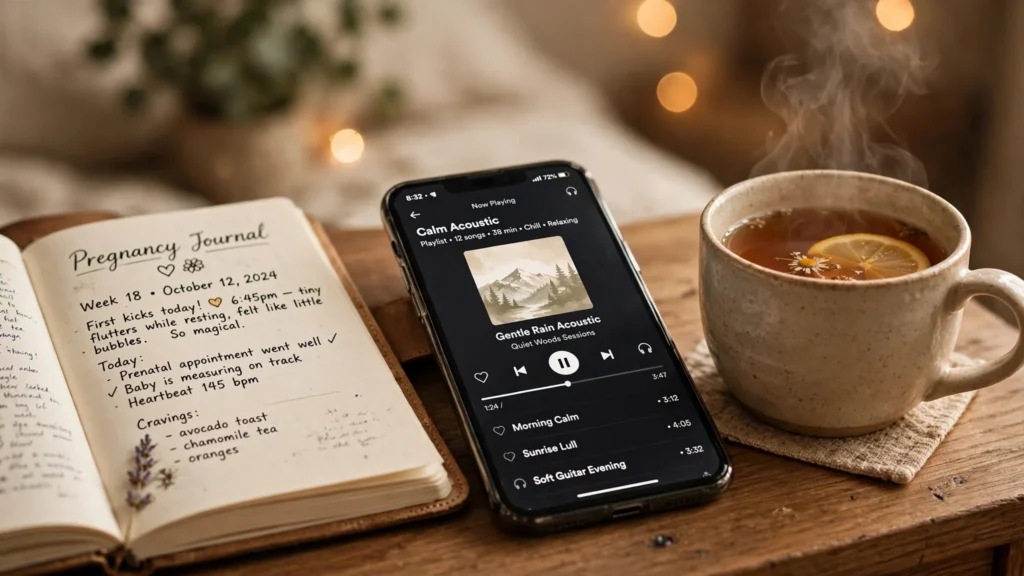
Pregnancy can be an exciting, emotional, and sometimes overwhelming experience. Between appointments, physical changes, new questions, and preparing for your baby’s arrival, many expectant mothers look for simple ways to create moments of calm and connection during the day.
One option is a pregnancy music app or prenatal audio app.
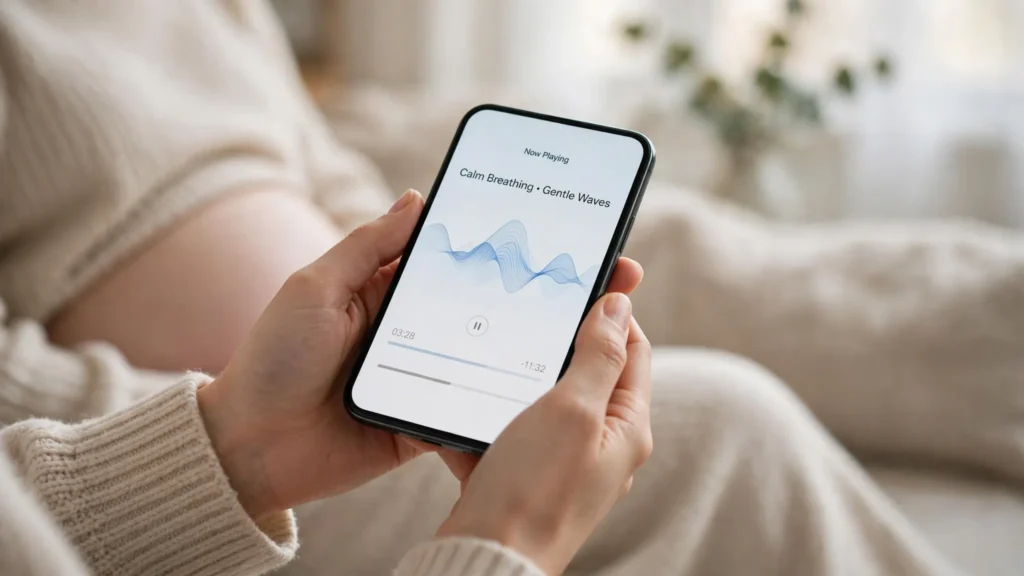
These apps can provide music, relaxation audio, guided sessions, educational content, or other sound-based experiences designed for pregnancy. Some focus almost entirely on music, while others combine audio with pregnancy tracking, wellness resources, milestones, and educational information.
But with so many digital pregnancy tools available, how do you know what to look for?
The right prenatal audio experience should be more than a collection of random relaxing songs. It should be easy to use, appropriate for pregnancy, supportive of your personal routine, and designed around the needs of expectant parents.
In this guide, we’ll explore the most important features to consider when choosing a pregnancy music app and how to build a prenatal audio routine that feels natural and enjoyable.
What Is a Pregnancy Music App?
A pregnancy music app is a mobile application that provides music or audio experiences intended to support expectant mothers during pregnancy.
Depending on the app, this might include:
- Instrumental music
- Relaxation tracks
- Meditation or mindfulness audio
- Guided breathing sessions
- Pregnancy-related educational content
- Prenatal bonding activities
- Pregnancy milestones
- Journaling or reflection tools
- Sleep or bedtime audio
- Postpartum resources
- Pregnancy tracking features
Not every app offers all of these features.
Some are designed specifically around music, while others take a broader approach by combining audio with pregnancy wellness and educational resources.
This distinction is important when comparing apps because the best option for one person may not be the best option for another.
Why Do Expectant Mothers Use Pregnancy Music Apps?
There are many reasons someone might incorporate audio into their pregnancy routine.
For some mothers, music is simply enjoyable. For others, it can become part of a quiet morning, evening wind-down, meditation session, or prenatal bonding ritual.
Music can also provide a convenient way to create a consistent environment for relaxation.
Healthcare resources commonly encourage expectant parents to communicate with their babies during pregnancy through talking, singing, and other gentle forms of interaction. Some NHS resources also suggest choosing music that both parent and baby can experience comfortably.
The important point is that a pregnancy music app should not create unrealistic expectations.
You do not need to listen to a particular type of music for your baby to develop normally, and there is no need to turn listening into a performance or daily obligation.
Instead, think of prenatal audio as a simple tool for creating meaningful moments during pregnancy.
10 Things to Look for in a Pregnancy Music App
Not all prenatal audio experiences are designed in the same way. Before choosing one, consider the following features.
1. High-Quality, Pregnancy-Friendly Audio
The first thing to evaluate is the actual audio experience.
If an app describes itself as a pregnancy music app, the music should be pleasant, easy to listen to, and suitable for the type of experience you’re trying to create.
Look for:
- Clear audio quality
- Comfortable volume levels
- Instrumental options
- Relaxing music
- Different moods or categories
- Tracks of varying lengths
- Minimal interruptions
- Easy playback controls
You should also be able to control the volume yourself.
There is no reason to place headphones or speakers directly against your abdomen to try to make your baby hear the music. Prenatal audio should primarily be an experience that you enjoy comfortably.
Some NHS maternity resources specifically recommend keeping music at a comfortable level rather than exposing the baby to excessively loud sound.
2. A Variety of Audio Experiences
One playlist may be relaxing today but not necessarily tomorrow.
Pregnancy can involve different emotional and physical needs from one day to another. You might want calming instrumental music in the evening, something gentle during a morning routine, or audio that helps you create a focused bonding moment.
A useful pregnancy music app may therefore provide different categories, such as:
Relaxation
Music designed to create a calmer environment during quiet moments.
Prenatal Bonding
Audio that can be incorporated into a routine involving talking, reflection, singing, or simply spending intentional time thinking about your baby.
Sleep and Bedtime
Gentle audio that can become part of an evening wind-down routine.
Mindfulness
Audio that encourages breathing, awareness, and present-moment attention.
Everyday Listening
Music that you can simply enjoy without assigning a specific purpose to it.
The goal isn’t to find the “perfect” pregnancy playlist.
It’s to have enough variety that the app remains useful throughout different moments of your pregnancy.
3. Simple and Intuitive Navigation
A pregnancy app should make your experience easier, not more complicated.
When you open an audio app, you should be able to quickly understand:
- Where to find music
- How to start and stop playback
- How to adjust volume
- How to browse different categories
- How to save favorites
- How to return to previously played content
This becomes particularly important when you’re tired or simply want a few quiet minutes.
A good prenatal audio experience should reduce friction.
You shouldn’t have to navigate through five different screens just to start a relaxing track.
4. Features That Support a Routine
One of the biggest differences between simply listening to music and using a dedicated prenatal audio experience is routine.
Instead of opening an app randomly whenever you remember, you may find it more meaningful to incorporate audio into something you already do.
For example:
Morning
5–10 minutes of gentle music while preparing for the day.
Afternoon
A short audio break during work or rest.
Evening
10–20 minutes of calming music, breathing, journaling, or prenatal reflection.
Bedtime
A quiet playlist while preparing for sleep.
A good pregnancy app can make these routines easier to maintain.
If you’re interested in creating a more structured practice, you can also explore our guide on how to create a daily prenatal bonding routine when building your own pregnancy routine.
5. Prenatal Bonding Features
A pregnancy music app can become more meaningful when audio is connected to intentional bonding.
Prenatal bonding doesn’t have to involve a complicated activity.
You might:
- Talk to your baby
- Sing
- Listen to a favorite song
- Read aloud
- Reflect on your pregnancy
- Place your hands gently on your bump
- Think about your hopes for your baby
- Share the experience with your partner
These small moments can help you feel more intentional about your pregnancy experience.
Healthcare resources also describe talking, singing, touching the bump, and playing music as simple ways expectant parents can engage with their unborn baby.
However, prenatal bonding is personal.
Some parents feel connected very early, while others need more time. Not feeling an immediate emotional connection does not mean you’re doing anything wrong.
6. Pregnancy Education and Reliable Information
Music may be the reason you download a pregnancy audio app, but educational resources can make the experience significantly more useful.
Consider whether the app provides access to trustworthy information about topics such as:
- Pregnancy milestones
- Prenatal wellness
- Preparing for birth
- Emotional wellbeing
- Postpartum preparation
- Pregnancy questions
- Baby development
- When to seek professional support
Digital pregnancy tools can be useful, but information quality matters.
NHS maternity guidance emphasizes the importance of reliable, evidence-based digital information and points to assessment approaches for maternity apps and digital tools.
When evaluating an app, ask:
Who created the content?
Are health claims supported by credible sources?
Does the app clearly distinguish wellness information from medical advice?
Does it encourage users to seek professional care when appropriate?
These questions can help you distinguish a thoughtful pregnancy resource from an app that simply uses pregnancy-related keywords.
7. Pregnancy Tracking and Milestones
Audio does not have to exist separately from the rest of your pregnancy experience.
Some pregnancy companions combine audio with pregnancy tracking and milestone information.
This can be useful because pregnancy is not just a series of individual moments. It is a journey that changes from week to week.
A broader pregnancy companion might help you:
- Follow pregnancy milestones
- Learn about changes during pregnancy
- Create personal routines
- Listen to audio
- Save meaningful experiences
- Explore educational resources
- Prepare for postpartum
This can make the app feel more like a companion rather than simply a music player.
However, tracking features should complement not replace professional prenatal care.
Regular prenatal appointments remain an important part of pregnancy care, and NHS guidance advises pregnant people to contact their maternity care team when they have concerns rather than waiting for their next appointment.
8. Privacy and Data Practices
Privacy is another important consideration.
Pregnancy is personal, and many pregnancy apps collect information that users may consider sensitive.
Before signing up, look at:
- What information the app collects
- Why the information is collected
- Whether data is shared with third parties
- Whether you can delete your account
- Whether personal information is optional
- How the company protects your information
You should not assume that every pregnancy app handles personal data in the same way.
Take a few minutes to review the app’s privacy policy before entering information you would prefer to keep private.
9. Flexible Listening Options
A good prenatal audio experience should fit into your life.
Consider whether the app supports features such as:
- Background playback
- Pause and resume
- Volume control
- Track selection
- Favorites
- Different session lengths
- Headphone or speaker listening
- Easy access when your phone screen is locked
These may seem like small details, but they can make a significant difference to everyday usability.
For example, if you’re using music during a short evening relaxation routine, you don’t want the experience interrupted because you have to keep your phone open.
10. A Broader Pregnancy Wellness Experience
Finally, consider what you actually want from the app.
If all you want is a playlist, a standard music streaming service may already meet your needs.
But if you’re looking for something specifically designed around pregnancy, you may want an experience that combines audio with:
- Prenatal bonding
- Pregnancy wellness
- Education
- Milestones
- Relaxation
- Reflection
- Postpartum preparation
This is where the difference between a pregnancy music app and a pregnancy companion becomes important.
A pregnancy music app primarily answers:
“What should I listen to?”
A broader pregnancy companion can help answer:
“How can I create meaningful, supportive moments throughout my pregnancy?”
What About Music and Baby Development?
This is one area where expectant parents should be especially careful with online claims.
You may see pregnancy apps or websites claiming that certain types of music can make a baby smarter, improve intelligence, or directly enhance fetal development.
Such claims should be treated cautiously.
Hearing develops during pregnancy, and babies can respond to sounds as pregnancy progresses. But that does not mean that playing specific music produces guaranteed developmental benefits.
For this reason, it is better to think about prenatal music in terms of your experience:
- Does the music help you relax?
- Do you enjoy listening to it?
- Does it help you create a routine?
- Does it give you a quiet moment to connect with your pregnancy?
- Does it make you feel comfortable and supported?
Those are meaningful reasons to listen without placing unnecessary expectations on yourself or your baby.
How to Create Your Own Prenatal Audio Routine
Once you’ve found a pregnancy music app that meets your needs, you can turn it into a simple routine.
You don’t need an hour-long session.
Even a few intentional minutes can become a meaningful part of your day.
A Simple 10-Minute Routine
Minute 1–2: Settle In
Find a comfortable position and reduce distractions.
Take a few slow breaths.
Minute 3–6: Listen
Play a piece of music you enjoy.
Let yourself listen without multitasking.
Minute 7–8: Connect
Place your hands comfortably on your bump if that feels good to you.
You might talk to your baby, sing quietly, or simply think about your pregnancy.
Minute 9–10: Reflect
Ask yourself:
- How am I feeling today?
- What am I looking forward to?
- Is there anything I need support with?
- What is one thing I’m grateful for today?
The routine doesn’t need to be perfect.
The value comes from creating a small space in your day that belongs to you and your pregnancy.
Where Womb Serenade Fits In
If you’re looking for a pregnancy app that goes beyond simply playing music, Womb Serenade is designed around a broader prenatal experience.
Rather than treating music as an isolated feature, Womb Serenade combines audio with elements of pregnancy wellness, learning, milestones, and prenatal connection.
The idea is to give expectant mothers a space where audio can become part of a larger pregnancy routine.
For example, you might use a calming track during a quiet evening, explore pregnancy information during the week, reflect on a milestone, and return to audio when you want another intentional moment of connection.
That broader approach can be particularly useful for mothers who want more than a playlist but don’t necessarily want a pregnancy tracker focused entirely on measurements and dates.
You can learn more about the Womb Serenade pregnancy companion through the website and explore how its audio, pregnancy resources, and wellness features fit together.
Pregnancy Music App vs. General Music App
It can help to understand the difference before choosing an app.
| Feature | General Music App | Pregnancy Music App | Broader Pregnancy Companion |
|---|---|---|---|
| Music | ✓ | ✓ | ✓ |
| Relaxation audio | Sometimes | Often | Often |
| Pregnancy-specific content | ✗ | Sometimes | ✓ |
| Prenatal bonding | ✗ | Sometimes | ✓ |
| Pregnancy milestones | ✗ | Sometimes | ✓ |
| Pregnancy education | ✗ | Sometimes | ✓ |
| Wellness resources | Limited | Often | ✓ |
| Pregnancy-focused routines | ✗ | Sometimes | ✓ |
| Postpartum resources | ✗ | Sometimes | Potentially |
| Personalized pregnancy experience | Limited | Moderate | Broader |
There isn’t necessarily one category that everyone needs.
Your choice should depend on what you want the app to help you accomplish.
Questions to Ask Before Downloading a Pregnancy Music App
Before installing a prenatal audio app, ask yourself:
Does the app provide audio I actually enjoy?
You are more likely to use something that fits your personal taste.
Is the app easy to navigate?
You should be able to start listening without unnecessary steps.
Does it offer more than a collection of tracks?
If you’re looking for a pregnancy-specific experience, consider whether it provides wellness, education, bonding, or milestone features.
Is the information trustworthy?
Look for transparent authorship, credible sources, and responsible health communication.
Does it respect privacy?
Review what personal information the app collects and how it is used.
Can I create my own routine?
The best app is one that fits naturally into your daily life.
Does it make unrealistic medical claims?
Be cautious about promises involving fetal intelligence, guaranteed development, or medical outcomes.
Does it complement prenatal care?
A digital tool should support your pregnancy experience rather than replace your doctor, midwife, or other qualified healthcare professional.
Frequently Asked Questions
What is the best pregnancy music app?
There isn’t one pregnancy music app that is automatically right for everyone. The best choice depends on what you want from the experience.
If you only want relaxing music, a simple audio app may be enough. If you want music alongside pregnancy education, milestones, wellness, and bonding activities, look for a broader pregnancy companion.
Is it safe to listen to music during pregnancy?
Listening to music at a comfortable volume is generally part of normal everyday listening. You should avoid excessively loud sound exposure, and there is no need to place headphones directly against your abdomen.
If you have specific concerns about sound exposure during pregnancy, discuss them with your healthcare professional.
Can I use a pregnancy music app for prenatal bonding?
Yes. Music can be incorporated into a prenatal bonding routine alongside talking, singing, reading, reflection, or simply spending quiet time thinking about your baby.
The goal is not to create a perfect bonding experience. It is simply to create opportunities for intentional connection.
How long should I listen to pregnancy music?
There is no universal amount of time you need to listen.
You might listen for five minutes during a short break or 20 minutes as part of an evening routine. Choose a duration that feels comfortable and sustainable.
Should I play music directly against my belly?
There is no need to place headphones or speakers directly against your abdomen. Comfortable listening at an appropriate volume is sufficient.
Can pregnancy music make my baby smarter?
There is no reason to use a pregnancy music app with the expectation that a particular type of music will guarantee higher intelligence or improved development.
Choose music because you enjoy it, because it helps create a relaxing environment, or because it gives you an opportunity to connect with your pregnancy.
Can my partner use a pregnancy music app too?
Absolutely.
Prenatal audio routines don’t have to be limited to the pregnant parent. Partners can participate by listening together, singing, talking to the baby, or creating a shared evening routine.
Should a pregnancy music app replace prenatal appointments?
No.
A pregnancy app can provide education, wellness support, audio, and organizational tools, but it should not replace professional prenatal care.
If you’re concerned about your health or your baby’s wellbeing, contact your doctor, midwife, or maternity care team.
Final Thoughts
Choosing a pregnancy music app isn’t simply about finding the longest playlist or the most tracks.
The more important question is:
What kind of pregnancy experience do you want the app to support?
For some expectant mothers, that may mean relaxing music at the end of the day.
For others, it may mean a short prenatal bonding ritual, educational content, pregnancy milestones, mindfulness, or a combination of several experiences.
Look for an app that is easy to use, respectful of your privacy, transparent about health information, comfortable to listen to, and designed around realistic expectations.
Most importantly, choose something that supports your pregnancy rather than adding another task to your day.
A few quiet minutes with music can simply be a few quiet minutes.
And sometimes, that’s exactly what you need.
Womb Serenade takes this broader approach by bringing audio, pregnancy wellness, learning, milestones, and prenatal connection together in one pregnancy-focused experience.